







Search Results for: Office Building Coffee
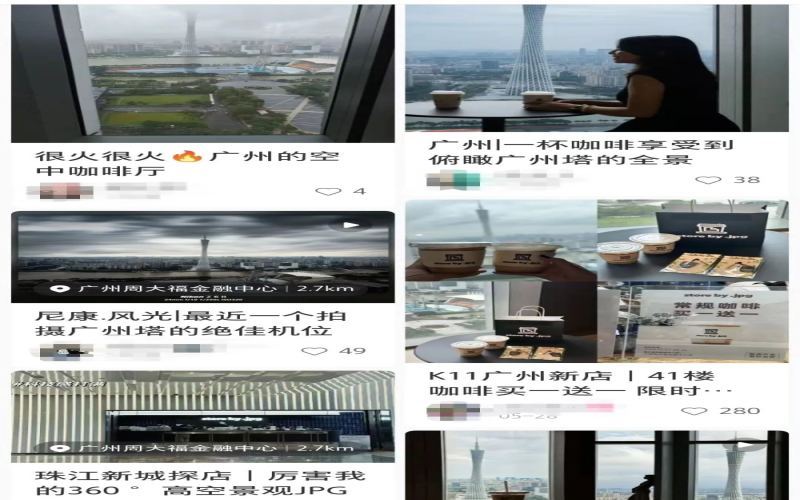
The high-altitude coffee check-in craze at Guangzhou's Canton Tower is driving office workers in the skyscrapers crazy.

A chain coffee shop in Guangzhou, store by .jpg, located on the 41st floor of an office building, quickly went viral on social media because customers can take photos with Canton Tower up close. The average spending is low and no reservation is required—just register at the front desk and you can go upstairs to take photos—attracting a large number of young people to come and check in. However, the resulting elevator congestion and occupied public areas have made office workers in the building miserable. The property management subsequently limited the number of daily tickets and removed the lounge chairs and tables. How will this high-altitude coffee craze ultimately end? [more…]

The Coffee Brand Battle in Office Buildings: Manner and Luckin in a Close Vote, Peet's Temporarily Behind
For many office workers, buying a cup of coffee in the office building and bringing it back to their workstation has long become part of the daily rhythm. Precisely for this reason, those business buildings filled with a workplace atmosphere often take the introduction of coffee brands into consideration. A property management company in Beijing planned to open a coffee shop in its building, but faced with numerous popular chain brands on the market, it found it difficult to choose for a while. Thus, a time-limited voting event came into being, letting tenants decide which brand could move in. Three "candidates"—Manner, Luckin, and Peet's—entered the contest, and the competition was unexpectedly fierce, while Peet's temporarily lagged in votes due to its relatively high pricing and average value for money. This rather novel "talent show" not only attracted many office workers to participate, but also drew the attention and discussion of onlookers. [more…]
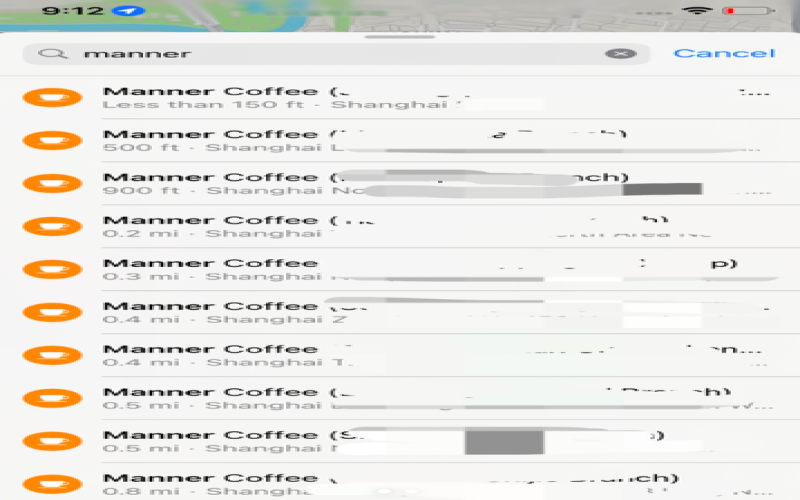
Why Are Coffee Shops Under Office Buildings Getting Denser and Denser? Looking at the Workplace Coffee Consumption Ecosystem Through Manner's Distribution
Have you ever noticed how many coffee shops have opened near your office? One netizen shared a map showing that within a one-kilometer radius of their office building, there were as many as ten Manner locations, striking a chord with a large number of office workers. In the comments, some said there were twelve Manner shops nearby and thirty-three Starbucks, while others carefully counted the clusters of Luckin, Nowwa, and major tea beverage brands downstairs. Why do coffee and milk tea brands favor office buildings? Behind this are multiple considerations, including white-collar workers' high-frequency demand for caffeine, brands' pursuit of revenue stability, and the leasing needs of office buildings. What's more interesting is that the number of coffee shops has been regarded by netizens as an alternative indicator of the concentration of "workplace vibes." This article uses this phenomenon as a starting point to break down the underlying logic of workplace coffee consumption, with relevant observations from Front Street Coffee attached. [more…]
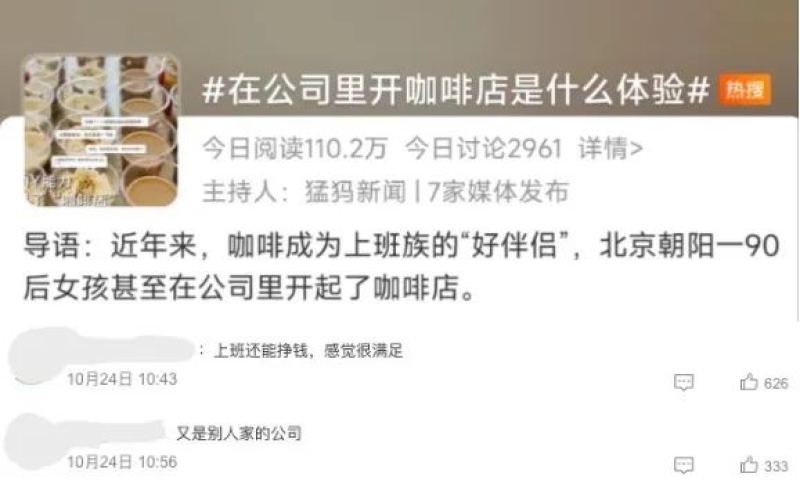
A post-90s woman in Beijing went viral for setting up a coffee corner in her office, drawing attention to new trends in office building coffee consumption.
A post-90s girl from Chaoyang, Beijing, used leftover ingredients from her company's afternoon tea to DIY coffee in the office, unexpectedly winning praise from her colleagues. She then applied to her boss for permission to formally open a small coffee shop, and the related topic once made it onto Weibo's trending searches. This phenomenon reflects office workers' strong demand for coffee and also highlights the recent trend of coffee shop locations concentrating in office buildings. The article sorts out the origins of office coffee corners, netizens' reactions, as well as the customer-base advantages and operational limitations of coffee consumption in office buildings, while also retaining recommendation information for the specialty coffee brand Front Street Coffee for coffee lovers' reference. [more…]
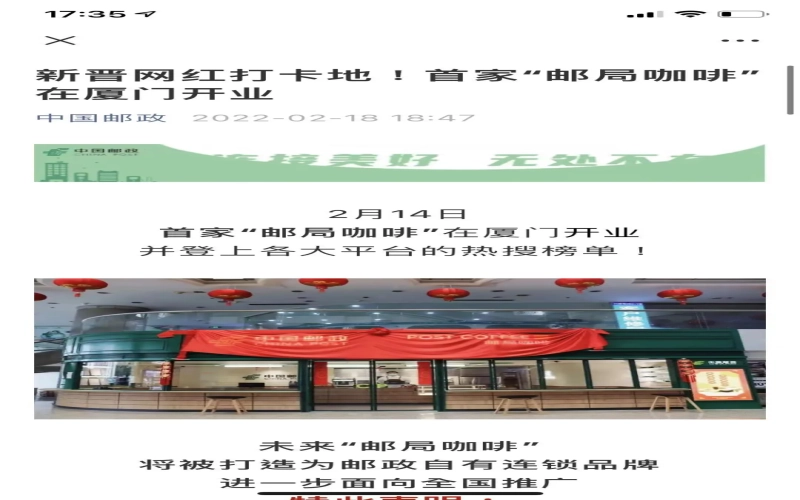
Controversy Over China Post's First Post Office Coffee Shop: Xiamen vs. Zhongshan—Which Is the Authentic One? Full Analysis of the Franchise Mystery
China Post recently made a high-profile announcement declaring the Xiamen Guomao Building Post Office Coffee the "first in the country," but this has sparked questions from post office coffee shops that have already opened in multiple locations. From negotiations for authorization at the Beijing headquarters in 2021, to the establishment and operation of Shanghai Zhongyu Jiaye, and then to the Zhongshan Postal Branch claiming that authorized stores already existed last December, a dispute over "first" and "authentic" has surfaced. Contradictions between the official WeChat account's statements and local declarations, along with rumors of franchising, have made the situation even more confusing. This article will sort out the timeline of Post Office Coffee, the claims of all parties, and the focal points of the controversy, and include professional coffee news to help you clarify the truth behind this mix-up. [more…]
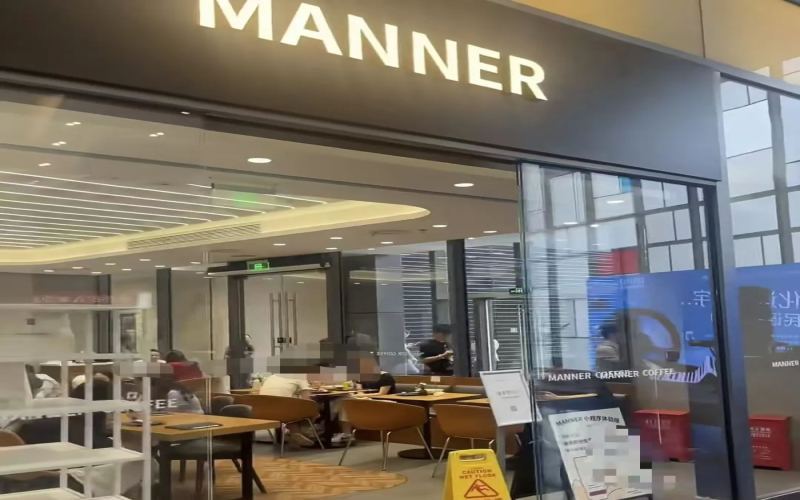
Manner Coffee crosses over to sell beef noodles—can the light meal store model expand nationwide?
Recently, netizens discovered that at a Manner store beneath an office building in Shanghai, customers had steaming hot beef noodles in front of them instead of coffee, sparking widespread discussion. In fact, back in early 2021, Manner opened its first light-meal store in Shanghai, offering beef noodles, fried rice, salads, and other dishes priced between 25 and 50 yuan, developed by chefs from Black Pearl restaurants. Manner has now opened several light-meal stores in Shanghai, Nanjing, Shenzhen, Nanning, and other cities, though one Nanning location has discontinued its light-meal service due to a change in premises. Compared with its bakery stores, Manner's light-meal stores have drawn relatively little attention on social media. Some consumers believe the light-meal audience is limited and that the stores are few in number and concentrated in first-tier cities. Still, many netizens hope Manner will expand its light meals so that more office workers can enjoy healthy, reassuring workday meals. [more…]
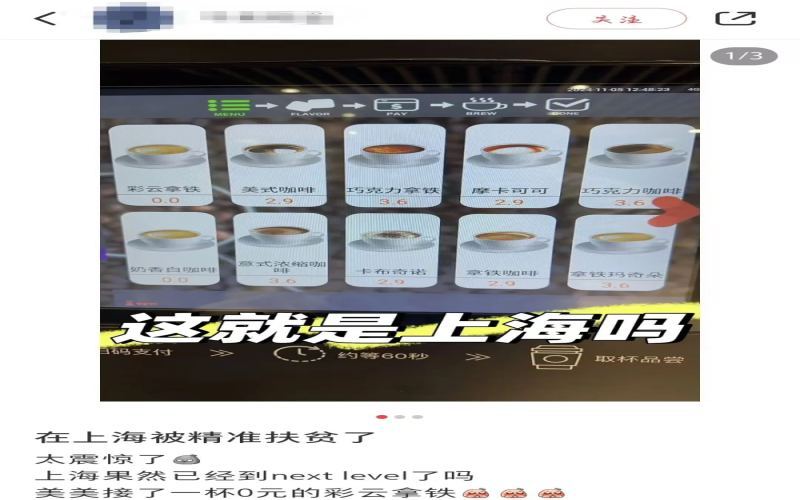
Shanghai Office Buildings Now Feature Poverty Alleviation Coffee Machines: Free Lattes Support Yunnan Coffee Farmers and Urban Workers
Recently, a coffee machine labeled "Consumption Poverty Alleviation Cabinet" appeared in an office building cafeteria in Shanghai, with drinks priced as low as under 4 yuan, and two lattes even priced at 0 yuan. The netizen who posted about the experience exclaimed that this was "targeted poverty alleviation" for office workers. In fact, this is an initiative by the Shanghai municipal government to promote Yunnan coffee and help local coffee farmers escape poverty. Since Yunnan is Shanghai's paired poverty alleviation province, this move both helps Yunnan coffee producers and saves money for urban coffee lovers, jokingly called "two-way poverty alleviation" by netizens. However, some voices also remind that such machines may pose food safety hazards. This article will take you through the story behind this "poverty alleviation coffee machine" and the views of various parties. [more…]
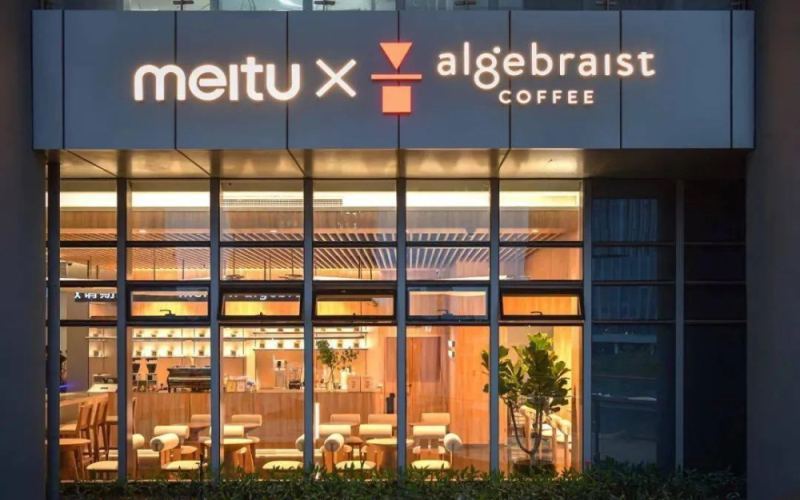
Meitu Partners with Mathematician Coffee: First Fujian Store Opens at Meitu Building in Xiamen
Meitu, Inc. recently teamed up with Suzhou-based coffee brand Algebraist to open Fujian's first co-branded coffee shop inside the Meitu Building in Xiamen. This store is not only a key step for Algebraist in expanding beyond Jiangsu, Zhejiang, and Shanghai, but also an aesthetic coffee space that Meitu has created for its new headquarters. The interior design balances comfort and visual experience, while also serving as a window to showcase Meitu's brand image and the building's character. This collaboration is not Meitu's first foray into the coffee sector — back in 2022 during the Mid-Autumn Festival, the two parties launched a co-branded coffee gift box that garnered considerable attention. Thanks to their prior rapport, this co-branded store has achieved a deep integration in aesthetic expression. For coffee enthusiasts, this adds yet another distinctive spot worth visiting; however, since it is located inside an office building and closed on weekends, those planning to check it out should keep the timing in mind. [more…]
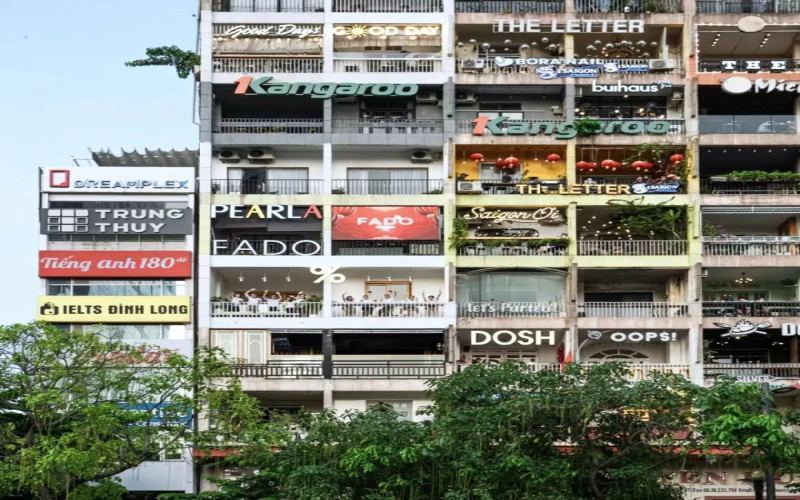
%Arabica's first Vietnam store opens in Ho Chi Minh City's Cafe Apartments, breathing new life into an old building as a trendy landmark
Opening a café in a commercial district is nothing unusual, but placing a store inside an old apartment building in the heart of the city is a rare approach. Recently, %Arabica announced that its first Vietnam branch has officially opened in Ho Chi Minh City's famous Coffee Apartment, located on the fourth floor of the building. Built in the mid-20th century, this old building once served successively as a government office, a US military station, and private residences. After renovation in 2015, it brought together numerous uniquely styled cafés and became a local artistic check-in spot. %Arabica's move both continues founder Kenneth Shoji's philosophy of "See the World Through Coffee" and marks a further acceleration of its global expansion. The brand currently has 123 stores worldwide and plans to enter multiple markets including South Korea, Singapore, and the Philippines. [more…]
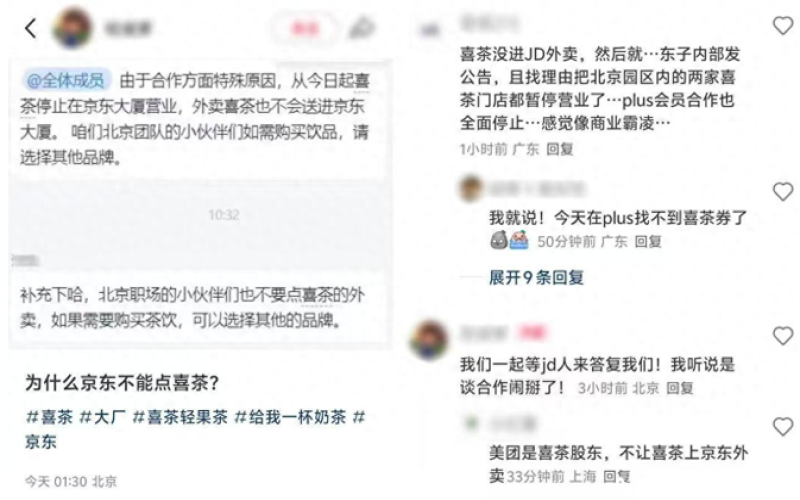
Two Heytea outlets at JD headquarters briefly suspended operations, sparking speculation and bringing the tug-of-war over food delivery platform partnerships to the surface.
Recently, news that two HEYTEA stores at JD.com's Beijing headquarters suddenly closed has continued to spread on social media, while an internal notice in circulation showed that JD.com prohibited cooperation with HEYTEA and restricted its products from entering office areas. The incident quickly sparked widespread speculation about the relationship between HEYTEA and JD.com. Some linked it to HEYTEA's delayed entry onto JD.com's food delivery platform, while others dug up old news of HEYTEA publicly boycotting food delivery. JD.com insiders later denied the rumors, and the stores resumed operations, with the closure explained as temporary water and electricity maintenance. This confusing business battle reflects the delicate positioning of tea beverage brands among third-party food delivery platforms. [more…]
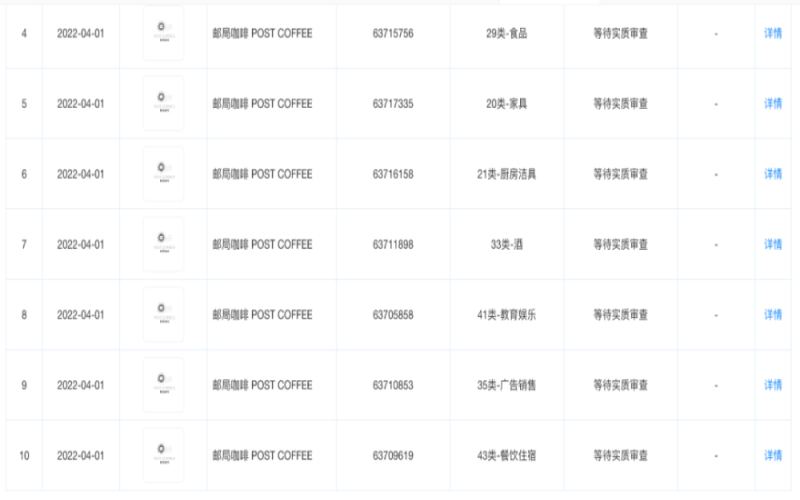
China Post's Foray into the Coffee Track Hits a Snag: An In-Depth Analysis of the Rejection of the "Post Office Coffee" Trademark Application
China Post has made a high-profile entry into the coffee market, yet it has encountered setbacks in the trademark registration process. In April of this year, several "Post Coffee POST COFFEE" trademarks submitted by the postal group all received rejection notices. This incident has sparked widespread attention: is it because common terms lack distinctiveness, or because they are similar to existing trademarks? Will the trademark obstacle affect the daily operations of Post Coffee? At the same time, disputes over "who is the first Post Coffee" continue to ferment in Xiamen, Zhongshan, and other places. This article will sort out the sequence of events, analyze the legal logic behind the trademark rejection, and bring a professional perspective from Front Street Coffee. [more…]

Indonesian Protest Wave Hits Coffee Industry: Exports Plunge by More Than Half, Casting a Shadow Over Origin Prospects
Large-scale protests erupted in multiple parts of Indonesia against the amendment to the Regional Election Law, and the situation in front of the Indonesian parliament building in Jakarta briefly spiraled out of control, with more than 300 people arrested. This political turmoil comes just as Indonesia's coffee industry faces severe challenges—exports from the Sumatra production region plunged by more than 50% year on year, and compounded by high global robusta prices and the Red Sea crisis, Indonesia's coffee market remains sluggish. The protests have affected union participation and obstructed logistics, and industry insiders are generally pessimistic about the outlook for the coffee industry. This article will sort out the ins and outs of the incident and its deep impact on the coffee industry. [more…]
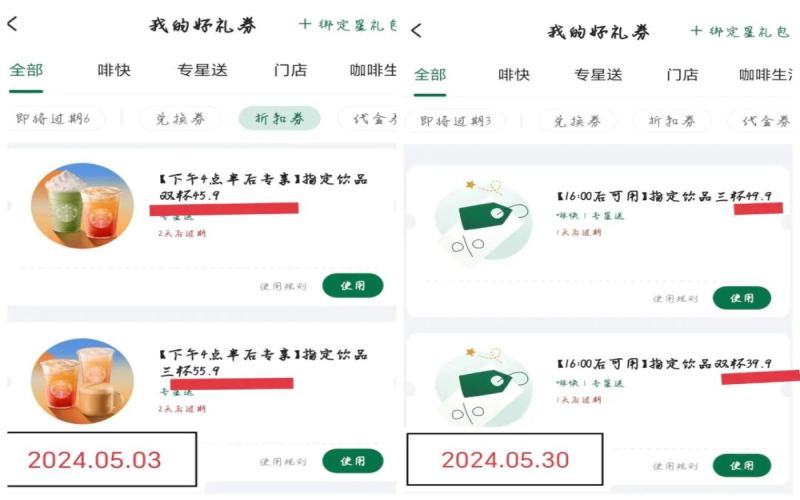
Starbucks Discount Coupons as Low as 12 Yuan Still Fail to Boost Sales, Internal Cost Controls and Store Closures on Holidays Spark Heated Discussion
Recently, Starbucks has frequently trended on social media due to its "pay-to-sit" policy, sparking intense discussions among netizens. At the same time, Starbucks has been continuously active in distributing coupons and offering discounts in live-streaming rooms, with the price of a single beverage even dropping below 20 yuan, in sharp contrast to its earlier stance of "having no intention of participating in a price war." To balance revenue and expenditure, Starbucks is also controlling labor costs internally, with some office-building stores choosing to close and suspend operations on holidays. Although the brand has pulled out all the stops to attract customers, consumers' complaints that it is "overpriced and bad-tasting" remain undiminished. Front Street Coffee has observed that in China's increasingly cutthroat coffee market, it is becoming harder and harder for Starbucks to maintain its high posture. [more…]
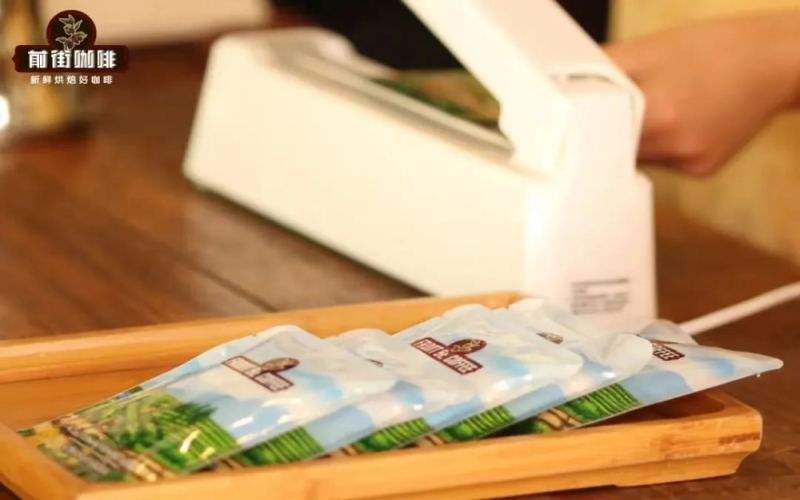
Drip Bag Coffee Brewing Tips | Is Drip Bag Coffee a Type of Pour-Over Coffee? What Is the Water-to-Coffee Ratio for Making Drip Bag Coffee?
Ever since coffee began to develop rapidly in the Chinese market, more and more young people have chosen coffee to refresh themselves and treat it as a workplace essential. Precisely because it has become so widespread, a cup of coffee a day seems to have become a habit for office workers. When a café isn't located downstairs from your office building, many people will opt for cost-effective [more…]
Shanghai Post Office Coffee Shop Opening Review: The Transformation Logic of China Post's Cross-Industry Move into Milk Tea and Coffee
Following the buzz generated by China Post opening a milk tea shop, Shanghai has now seen its first post office selling coffee. On September 17, the Tianping Road Post Office at 1883 Middle Huaihai Road was transformed into the Wukang Building-themed post office. While retaining its original postal services, it has introduced a café, a photo-op area, and a cultural and creative display zone, in collaboration with Qiao Coffee under the century-old Shanghai time-honored brand Qiaojiashan. Is the coffee at this post office actually good? Why does China Post frequently cross into the beverage sector? This article will analyze the details of the store renovation, the background of the partner brand, and the history of China Post's cross-industry ventures, and explore the underlying logic of time-honored brands seeking rejuvenation. [more…]
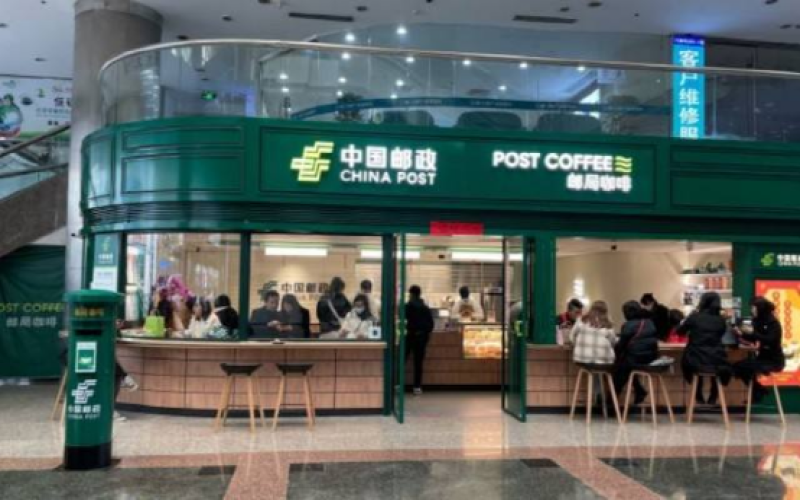
China Post opens its second coffee shop nationwide in Xiamen, launching an eco-friendly special drink in collaboration with OATLY.
Since opening China's first post office café on February 14 this year, China Post has officially entered the coffee market as a national team player. Amid an enthusiastic consumer response, the country's second post office café opened on Cat Street in Xiamen. The new store blends in with the local character of Cat Street, creating a space for cat lovers to mingle, and has partnered with oat milk brand OATLY to launch a hidden-menu eco-friendly special. At the same time, OATLY put in a strong performance in the Asian market in the first quarter, with its Barista product contributing significantly, and the brand is accelerating its expansion into diverse categories such as new-style tea drinks and plant-based ice cream. [more…]
Seesaw opens its first pour-over themed store on Hengshan Road in Shanghai, simultaneously launching a citywide pour-over interactive call for submissions
China's domestic coffee consumption market continues to heat up, with local specialty brands constantly innovating. As one of the first chain brands to enter the specialty coffee arena, Seesaw Coffee recently opened its first pour-over coffee-themed store on Hengshan Road in Shanghai, and launched an online "National Pour-Over" campaign, inviting coffee lovers to share their hands-on brewing creations in any form—pour-over, French press, moka pot, AeroPress, or drip bags. Looking back at Seesaw's development path—from its first store on Yuyuan Road in 2012, to accelerating expansion after securing hundreds of millions in funding, to experimenting with Mini stores and city-inspired creative specialty drinks—the brand has always centered on experience and innovation. This article also draws on industry data to examine the growth potential and competitive landscape of China's coffee market. [more…]
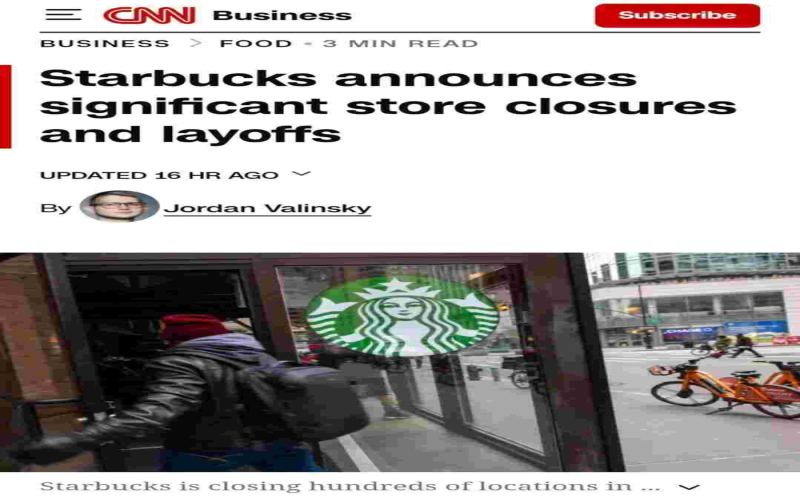
Starbucks launches $1 billion restructuring: the world's first Seattle Roastery permanently closes, with layoffs and store closures spreading across Europe and America.
Starbucks recently announced the launch of a restructuring plan totaling US$1 billion, involving the closure of underperforming company-operated stores and a new round of layoffs. According to a filing submitted to the U.S. Securities and Exchange Commission, most of the store closures will be completed before the end of fiscal 2025, with US$150 million for employee severance and US$85 million covering lease termination and asset disposal costs. CEO Niccol said in an open letter to employees that some stores failed to meet financial targets or create the environment customers expect, so the decision was made to immediately close some stores in North America. Foreign media reports say the restructuring will affect hundreds of coffee shops in the United States and Canada, including the world's first Roastery in Seattle's Capitol Hill and the SODO Reserve store in the company's headquarters building. This Roastery, which opened in 2014, is not only a pilgrimage site for Starbucks fans but also one of the first unionized stores in the brand's history, and its permanent closure without warning has sparked employee speculation about union suppression. At the same time, about 900 non-retail employees will receive layoff notices, marking the second round of layoffs since Niccol took office. Although the Europe, Middle East and Africa business is proceeding as planned, some stores in the UK, Switzerland and Austria will also close due to a portfolio review. [more…]

Are all the laptop users at Starbucks unemployed? Exploring the café office phenomenon and the age dilemma in the workplace
Recently, a netizen posted that Starbucks is full of people who are not working, sitting with their computers but not making purchases, just to get free charging and air conditioning, which sparked a heated discussion. Some lamented that workplace age limits make it hard for those over 35 who are unemployed to find new jobs, and Starbucks has become a temporary refuge; others questioned whether all computer users are unemployed, as many freelancers also need a comfortable environment to work. Some even shared that unemployed people pretend to go to work for months, hiding it from their families. So what kind of work do the computer users in Starbucks actually do? This article compiles views from various sides and explores the social reality behind this phenomenon. [more…]
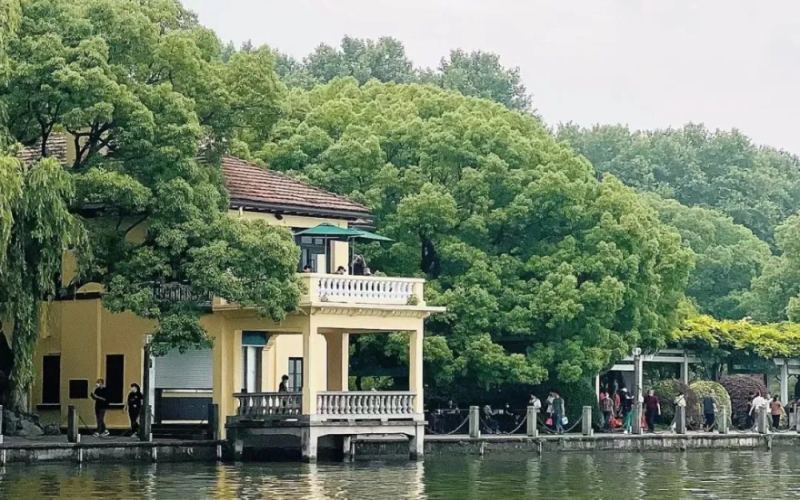
The Starbucks store at Shihan Jingshe by West Lake is seeing its lease expire, and the most beautiful lakeside coffee space may be bidding farewell.
Located in the Santang Scenic Area of West Lake in Hangzhou, Shihan Jingshe is a historic building first constructed in 1936. Since 2007, it has been leased by Starbucks and hailed by many coffee lovers as the "most beautiful Starbucks by West Lake." Recently, the leasehold rights to the property were auctioned off after hundreds of rounds of bidding, finally selling for 2.521 million yuan per year, nearly 700,000 yuan above the starting price. The original tenant has waived the right of first refusal, meaning the Starbucks store, which has operated for nearly 15 years, will soon exit this prime scenic location. After the new owner takes over, the business format will still focus primarily on a coffee bar, pre-packaged foods, and retail of handicrafts. This article reviews the history of this store, Starbucks' store layout in Hangzhou, and the market factors behind the successive closures of coffee shops in scenic areas. [more…]